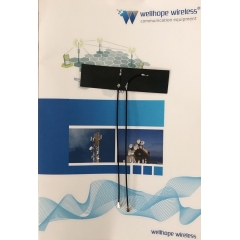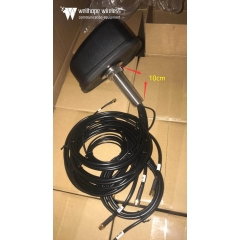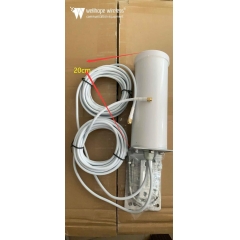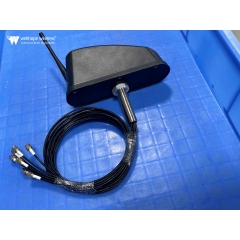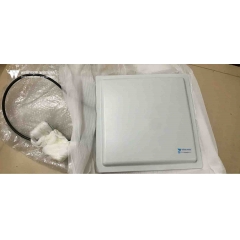

 5G Netzwerkantenne
I. Grundlegende Eigenschaften von Radiowellen
Geschätzte Lesezeit: 15 Minuten
1.1 Definition von Radiowellen
Radiowellen dienen als Träger von Signalen und Energie. Sie entstehen durch die Wechselwirkung oszillierender elektrischer und magnetischer Felder gemäß dem Wechselwirkungsgesetz „Elektrizität erzeugt Magnetismus und Magnetismus erzeugt Elektrizität“. Während der Ausbreitung stehen die elektrischen und magnetischen Felder stets senkrecht zueinander und beide senkrecht zur Ausbreitungsrichtung der Welle. Daher handelt es sich um **transversale elektromagnetische Wellen (TEM-Wellen)**.

Ihre Entstehung beruht auf hochfrequenten Schwingkreisen: Ändert sich der Strom in einem Stromkreis schnell, wird im umgebenden Raum ein elektromagnetisches Wechselfeld angeregt. Sobald sich dieses elektromagnetische Feld von der Wellenquelle löst, breitet es sich als Radiowellen im Raum aus, ohne auf ein Medium angewiesen zu sein – sie können sich sogar im Vakuum ausbreiten.
1.2 Zusammenhang zwischen Wellenlänge, Frequenz und Ausbreitungsgeschwindigkeit
Die Kernformel, die den Zusammenhang zwischen der Wellenlänge (λ), der Frequenz (f) von Radiowellen und ihrer Ausbreitungsgeschwindigkeit (Lichtgeschwindigkeit \( C \) im Vakuum, ungefähr \( 3×10^8 \, \text{m/s} \)) regelt, lautet:
\[ \lambda = \frac{C}{f} \]
**Wichtigste Schlussfolgerung:** Im selben Medium verhalten sich Frequenz und Wellenlänge streng umgekehrt proportional – je höher die Frequenz, desto kürzer die Wellenlänge. Dieses Verhältnis bestimmt direkt die Abmessungen von Antennen: Beispielsweise ist die Wellenlänge einer Antenne …
2,4-GHz-WLAN
Das Signal beträgt ungefähr 12,5 cm, was einer Halbwellendipolantennenlänge von etwa 6,25 cm entspricht; für ein
700 MHz
Bei einem niederfrequenten Kommunikationssignal beträgt die Wellenlänge etwa 42,8 cm, was eine Halbwellendipollänge von 21,4 cm erfordert. Darüber hinaus hängt die elektrische Leistung einer Antenne (z. B. Strahlungseffizienz, Verstärkung und Impedanz) direkt von ihrer **elektrischen Länge** (dem Verhältnis von physikalischer Länge zu Wellenlänge) ab. In der Praxis muss die benötigte elektrische Länge in die entsprechende physikalische Länge umgerechnet werden, um den ordnungsgemäßen Betrieb der Antenne zu gewährleisten.
1.3 Polarisation von Radiowellen
Polarisation bezeichnet die Änderung der Richtung des elektrischen Feldes während der Ausbreitung einer Radiowelle. Sie wird durch die räumliche Bewegungsbahn des Feldvektors bestimmt und bildet ein vollständiges Spektrum: **Zirkulare Polarisation ← Elliptische Polarisation → Lineare Polarisation**. Die wichtigsten Eigenschaften und Anwendungsbereiche der drei Polarisationsarten sind wie folgt:

- **Lineare Polarisation**: Die Richtung des elektrischen Feldes bleibt konstant; dies ist die gebräuchlichste Polarisationsform. Eine Welle mit einem senkrecht zum Boden verlaufenden elektrischen Feld ist eine **vertikal polarisierte Welle**, die eine hohe Resistenz gegenüber Bodenreflexionen aufweist und sich für terrestrische Mobilkommunikation (z. B. herkömmliche 2G/3G-Basisstationen) eignet. Eine Welle mit einem parallel zum Boden verlaufenden elektrischen Feld ist eine **horizontal polarisierte Welle**, die häufig in der Radio- und Fernsehübertragung, in Mikrowellenrelais-Kommunikationssystemen und anderen Anwendungsbereichen eingesetzt wird.
- **Zirkulare Polarisation**: Die Bahn des elektrischen Feldvektors ist kreisförmig und wird in **linkszirkulare** und **rechtszirkulare** Polarisation unterteilt, die sich gegenseitig ausschließen (eine linkszirkulare Antenne kann nur linkszirkular polarisierte Wellen empfangen und umgekehrt). Ihr Hauptvorteil liegt in der hohen Unempfindlichkeit gegenüber Mehrwegeausbreitung und Polarisationsverdrehung, wodurch sie in der Satellitenkommunikation weit verbreitet ist (z. B.
Beidou
,
GPS
Satelliten), Fernsteuerung unbemannter Luftfahrzeuge (UAV) und andere Szenarien.
**Elliptische Polarisation**: Die Bahn des elektrischen Feldvektors ist elliptisch. Dies ist die allgemeine Form der Polarisation: Zirkulare Polarisation tritt auf, wenn die Haupt- und Nebenachse der Ellipse gleich lang sind, lineare Polarisation, wenn die Nebenachse gegen null strebt. In realen Kommunikationsumgebungen werden rein linear oder zirkular polarisierte Wellen aufgrund von Mehrwegeausbreitung, Abschattung durch Hindernisse und anderen Faktoren häufig in elliptisch polarisierte Wellen umgewandelt.
1.4 Mehrwegeausbreitung
Bei der Ausbreitung von Radiowellen kommt es neben direkten Wellen auch zu Reflexion, Beugung und Transmission an Hindernissen wie Hügeln, Wäldern und Gebäuden. Dies führt dazu, dass das Empfangsgerät gleichzeitig mehrere Funkwellen empfängt – ein Phänomen, das als Mehrwegeausbreitung bekannt ist. Zu den wichtigsten Auswirkungen gehören: (1) Die Komplexität der Signalstärkeverteilung, was zu Schattenfading und schnellem Fading und damit zu starken Schwankungen der Signalstärke am Empfangsende führt; (2) Die Änderung der Polarisationsrichtung der Radiowelle, was zu Polarisationsfehlanpassung und einer Verringerung der empfangenen Signalstärke führt; (3) Die Entstehung von Laufzeitstreuung (der Zeitdifferenz zwischen Signalen, die über verschiedene Wege eintreffen) und damit zu Intersymbolinterferenz; (4) Die lokale Überlagerung (Verstärkung) oder Auslöschung (Abschwächung) von Signalen, abhängig vom Verhältnis zwischen Wegdifferenz und Wellenlänge. Beispielsweise erzeugen in dicht besiedelten Stadtgebieten Gebäudereflexionen eine Vielzahl von Mehrwegesignalen, was zu häufigen Schwankungen der von Mobiltelefonen empfangenen Signalstärke führt.

Die zentrale Lösung für dieses Problem ist die **Diversity-Empfangstechnologie**, die Mehrwegesignale empfängt und kombiniert, um Interferenzen zu minimieren. Sie lässt sich in zwei Kategorien unterteilen:
1. **Räumliche Diversität**: Nutzt mehrere einfach polarisierte Antennen mit einer sinnvollen räumlichen Anordnung (Abstand größer als das Zehnfache der Wellenlänge), um Signale über verschiedene Wege zu empfangen. Geeignet für Szenarien mit geringen Polarisationsanforderungen.
2. **Polarisationsdiversität**: Nutzt die orthogonalen Eigenschaften dualpolarisierter Antennen, um gleichzeitig zwei vertikal polarisierte Signale (z. B. +45°/-45°) zu empfangen. Aufgrund der geringen Korrelation der Signale verbessert das kombinierte Ausgangssignal die Empfangssicherheit deutlich und ist daher die gängigste Lösung für aktuelle Anwendungen.
5G
Basisstationen.